
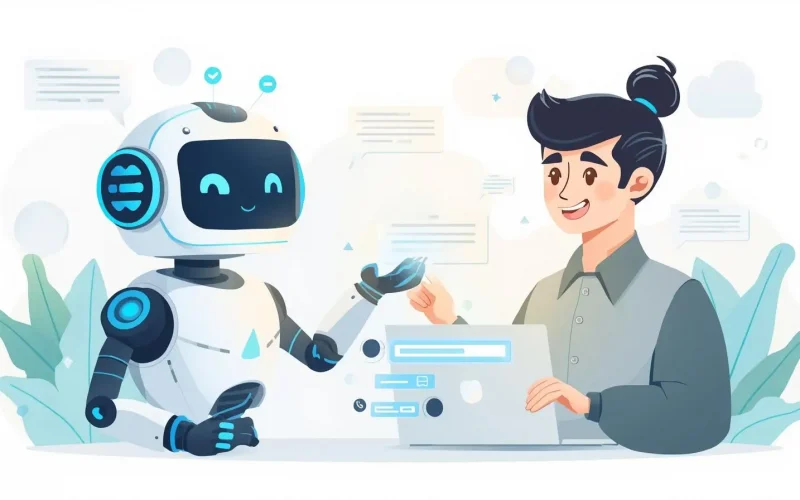
Will customers actually trust AI bots on my website?
Businesses everywhere are adding AI bots to their websites, but one of the most common worries is simple: will people actually trust an AI bot enough to interact, buy, or book? Let’s look at what really matters when it comes to building trust with website visitors, how to get your bot right, and why the answer is more optimistic than you might think.
Can customers trust AI bots to answer their questions?
People can and do trust AI bots—but only if the experience feels natural, reliable, and helpful. The biggest drivers of trust are clear communication, quick responses, and an easy-to-use interface. Most users start with a bit of skepticism, but when a chatbot responds quickly, understands their questions, and actually helps solve a problem, trust builds fast.
Research by Userlike found that 68% of consumers like getting instant answers from chatbots and 54% said they’d trust a bot if it delivered accurate responses to their questions (Userlike). Still, the trust factor drops when a bot seems robotic or gives irrelevant answers.
That’s where platforms like Surge by Thrive’s AI Bots really stand out. Surge bots are designed to answer FAQs, book appointments, qualify leads, and even connect users to a real person when needed, all with a conversational style that feels more human.
What makes customers trust or distrust an AI bot?
Trust isn’t just about technology—it’s about experience. Here’s what matters most:
1. Clarity: If users know they’re chatting with a bot but still get real help, trust rises. Being upfront (“I’m our virtual assistant. How can I help today?”) is key.
2. Consistency: Bots that give reliable, helpful answers—especially about things like hours, appointments, or pricing—build trust over time.
3. Human backup: If someone wants to talk to a real person, an instant handoff option keeps frustration low and trust high.
4. Security: If your chatbot is collecting info, users need to know their data is safe.
A study from Salesforce found that 64% of customers expect companies to interact with them in real time, and 62% trust a business more when their questions are answered immediately, even if it’s by a chatbot (Salesforce Research).
Do customers actually prefer AI bots or live chat?
Preferences depend on the context. For quick answers or simple requests—like booking an appointment or getting store hours—many users actually prefer bots because of the instant response (Gartner). For more complex or emotional needs, people want a human touch.
How to find the right balance:
- Use AI bots for instant help and routine questions.
- Let customers escalate to a live person (or leave a message) if they need more.
- Make it clear what your bot can and can’t do.
With Surge by Thrive’s AI Bots, you can customize this balance—set rules for when the bot answers and when it hands off to your team, so nobody gets stuck talking to a robot when they need real help.
How can I make my AI bot feel trustworthy?
Trust comes from the details. Here are some best practices for a trustworthy website chatbot:
1. Brand it to your business: Give your bot a friendly name, use your logo, and keep the voice conversational and on-brand.
2. Script clear, helpful responses: Pre-program FAQs, policies, and directions using real customer questions.
3. Secure your data: Make sure any info collected is handled securely and that your privacy policy is visible.
4. Collect feedback: Let customers rate their chatbot experience and use their comments to improve over time.
Surge makes this easy: Custom Forms can be integrated for feedback, and Workflow Automations help route leads and conversations to the right place—human or bot.
Do AI bots impact my reputation or SEO?
Absolutely. Bots that help users get answers fast can lead to better reviews, more leads, and higher conversions. Google also favors websites that offer strong user experiences, including chat and quick support (Search Engine Journal). But, if your chatbot feels spammy or frustrating, it can have the opposite effect—so testing and updates are crucial.
Surge by Thrive connects Reputation Management and CRM/Lead Capture directly to your AI bot, so you’re able to track results and turn conversations into real business outcomes.
What are the risks of using AI bots on my website?
While the benefits are huge, there are a few risks to keep in mind:
- Poorly configured bots can frustrate users or miss key leads.
- Privacy compliance is essential if you’re collecting sensitive info.
- Some customers still prefer humans—always offer that path.
Using a trusted platform like Surge, which combines Email & SMS Marketing with bot-triggered follow-ups and Calendars/Appointment Scheduling, helps minimize these risks.
FAQs about AI bot trust
Do people know when they’re chatting with a bot?
Yes—most do, and transparency helps. Honest disclosure and a friendly intro set the right expectations.
What if my customers don’t want to use the bot?
Give them a clear option to reach your team. Surge bots make this a one-click experience.
How do I measure trust or satisfaction?
Add a simple survey at the end of each chat, or track conversion rates and time spent chatting. You’ll quickly see if people are getting value.
Does a chatbot help me get more leads?
Definitely. By answering questions instantly—even after hours—you never miss a lead. Connect your bot to CRM/Lead Capture for the best results.
Key takeaways: Building trust with AI bots
- Be transparent—let customers know it’s a bot, and show how it can help.
- Keep it human—use friendly language and real examples.
- Offer a live person when needed—frustration kills trust.
- Secure your data—privacy is non-negotiable.
- Continuously improve—use customer feedback to make your bot smarter.
If you’re ready to add a trustworthy, high-converting chatbot to your website, see what Surge by Thrive’s AI Bots can do. Request a live demo or contact us to get started.