
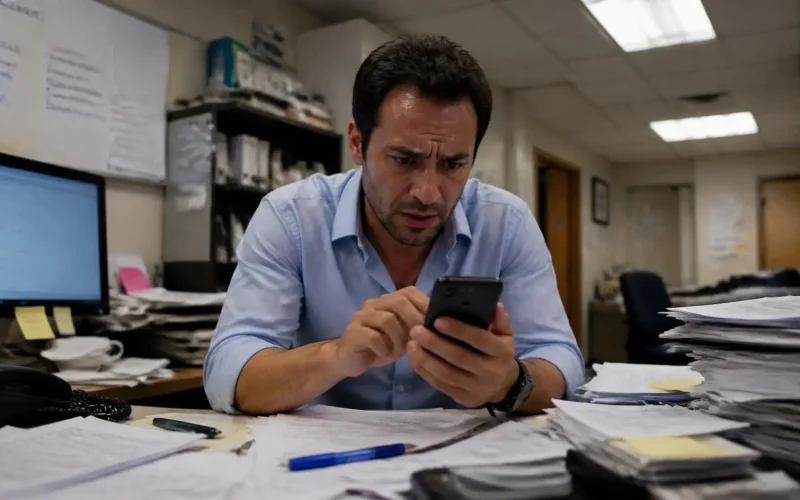
How can I make sure every missed call gets a text back right away?
A missed call does not always feel like a big deal in the moment.
You are helping a customer. Your team is on another line. You are driving between jobs. The front desk is busy. The call goes to voicemail, and you think, “I’ll get back to them in a few minutes.”
But that caller may already be moving on.
For many small businesses, a missed call is not just a missed conversation. It is a missed appointment, missed estimate, missed consultation, missed repair job, or missed customer who was ready to book right then.
The good news is that you do not need another person sitting by the phone all day to fix this. You need a system that notices the missed call and sends a helpful text back immediately.
That is exactly where missed call text back automation comes in.
Can my business automatically text someone after we miss their call?
Yes. A missed call text back system can automatically send a text message when someone calls your business and nobody answers.
The message should be short, helpful, and human. Something like:
“Hi, this is Thrive Plumbing. Sorry we missed your call. How can we help? Reply here and we’ll get you taken care of.”
That one text can reopen the conversation before the caller starts searching for someone else.
This matters because phone calls are still one of the highest-intent actions a customer can take. Google has reported that 70% of mobile searchers have used click-to-call directly from search results to connect with a business, which means many people calling you are already in decision mode. Google’s mobile search call research supports the simple idea that when people call from search, they usually want help now.
With Surge by Thrive’s Email & SMS Marketing and Workflow Automations, that first text can happen automatically instead of depending on someone remembering to follow up later.
Why is texting back faster than calling back later?
Because the customer is still paying attention.
If someone calls your business and gets no answer, there is a small window where they are still engaged. A quick text says, “We saw you. We care. We can still help.”
Waiting 30 minutes, two hours, or until the next day changes the whole feeling. By then, the person may have called another company, booked an appointment somewhere else, or decided your business is too hard to reach.
The same speed issue shows up in online lead response research. A well-known Harvard Business Review piece, The Short Life of Online Sales Leads, found that many companies were slow to respond to leads, and some never responded at all. The larger takeaway is still painfully relevant for local businesses: fast response gives you a real advantage.
A missed call text back is not meant to replace a real conversation. It is meant to save the conversation until a real person can step in.
What should the missed call text actually say?
Keep it simple.
Do not send a long sales pitch. Do not sound like a robot. Do not ask five questions at once. The first message should acknowledge the missed call and give the caller an easy next step.
Here are a few examples:
- “Hi, this is ABC Heating. Sorry we missed your call. What can we help you with today?”
- “Thanks for calling Smith Family Dental. We missed you, but you can reply here and we’ll help you get scheduled.”
- “Hi, this is Green Lawn Care. Sorry we could not answer. Do you need pricing, scheduling, or help with an existing service?”
The goal is not to close the sale in one message. The goal is to stop the lead from going cold.
Texting also needs to respect consent, opt-out rules, and carrier expectations. The FCC explains that consumers can revoke consent for robocalls and robotexts, and CTIA’s messaging guidance says business message senders should obtain consent and provide opt-out mechanisms. You can review the FCC’s consumer guidance on unwanted robocalls and texts and CTIA’s Messaging Principles and Best Practices.
This is why your missed call text system should be set up thoughtfully, not slapped together.
Can missed call texts help me book more appointments?
Yes, especially when the text connects directly to scheduling.
A missed call text is helpful by itself, but it gets even stronger when it gives the caller a way to book, request service, or continue the conversation without waiting.
For example:
“Sorry we missed your call. Want to grab a time now? You can reply here or book an appointment online.”
That message can connect to your Calendars and Appointment Scheduling page or route the person into your CRM so your team can follow up.
This is important because missed calls usually happen at the worst possible time. Lunch rush. After hours. Monday morning. During a job. While your office manager is already on the phone. Automation does not get overwhelmed in those moments.
Google Local Services Ads also show how important call handling is in local lead flow. Google notes that potential customers may call a Google forwarding number or send a message request, and businesses can manage those leads through their lead inbox. Google’s Local Services help documentation reinforces that calls and messages are both part of the local lead experience.
If your business is paying for SEO, Google Ads, Local Services Ads, or social media, you do not want the lead journey to break at the phone.
What happens after the first text?
The best setup does not stop after one message.
A smart missed call workflow can:
- Send the immediate text back
- Create or update the contact in your CRM
- Tag the lead as a missed call
- Notify your team
- Assign the lead to the right person
- Send a follow-up if the caller does not reply
- Move the person into a pipeline for tracking
This is where CRM and Lead Capture becomes important. If your missed calls only live in your phone log, they are easy to forget. If they flow into your CRM, they become trackable opportunities.
That means you can answer questions like:
How many calls did we miss this week?
How many missed callers replied to the text?
How many booked appointments?
Which marketing campaigns are creating calls we are not answering?
That last question matters because a missed call from Google Ads, your website, or your Google Business Profile may represent money you already spent to create the opportunity. If you are not tracking what happens after the phone rings, you may think you need more leads when you really need better follow-up.
Should the text come from a person or from the business?
For most small businesses, the first text should come from the business.
It should feel personal, but not fake. You do not need to pretend someone manually typed it if they did not. You can say:
“Hi, this is Main Street Auto. Sorry we missed your call. Reply here and our team will help.”
That feels clear and honest.
If your business uses AI Bots, the system can also help answer basic questions, collect details, or guide the person toward booking. But the tone still matters. People do not want to feel trapped in a weird automated maze. They want a fast path to help.
Twilio’s Consumer Preferences Report surveyed thousands of consumers about communication preferences, and its broader research points to the need for businesses to communicate in ways that feel timely, relevant, and useful.
The missed call text should feel like service, not spam.
What if someone calls after hours?
That is one of the best times to use missed call text back.
A lot of customers search after work, during lunch, at night, or on weekends. If they call and get voicemail, they may not wait until morning. A simple automated text can keep the door open.
For example:
“Thanks for calling Bright Smile Dental. Our office is currently closed, but you can reply here and we’ll follow up as soon as we reopen.”
Or:
“Sorry we missed your call. If this is urgent, reply URGENT. Otherwise, tell us what you need and we’ll follow up next business day.”
This kind of message sets expectations. It also gives the customer something better than silence.
For service businesses, law firms, healthcare offices, home services companies, med spas, and other appointment-driven businesses, after-hours calls can be some of the most valuable leads. The caller may not be casually browsing. They may need help soon.
How does my website fit into this?
Your website should make it easy for people to call, text, book, or submit a form.
A good SEO Website can help bring in traffic, but conversion depends on what happens after the visitor takes action. If someone calls from your site and you miss them, the system should still capture the opportunity.
You can also combine missed call text back with Custom Forms. For example, the text can send someone to a short form asking what service they need, where they are located, and how soon they want help.
That turns a missed call into useful information your team can act on.
Can this also help my reviews and reputation?
Indirectly, yes.
People often judge your business by how responsive you feel. If they call and hear nothing back, that creates frustration. If they get a quick, helpful text, the experience feels more organized.
Over time, better communication can support better customer experiences, and better experiences can lead to better reviews. With Reputation and Review Management, you can also automate review requests after completed jobs, appointments, or services.
The missed call text is not a review tool by itself. It is part of the customer experience that comes before the review.
What is the easiest way to set this up?
The easiest way is to connect your phone activity, CRM, text messaging, automations, scheduling, and follow-up in one system.
That is what Surge by Thrive is built to help small businesses do.
Instead of juggling missed calls, voicemail, sticky notes, inboxes, and random follow-up reminders, Surge can help you build a workflow where missed calls trigger immediate action.
A simple missed call workflow might look like this:
- Customer calls your business
- No one answers
- Surge sends an automatic text back
- The caller replies with what they need
- The contact is captured in the CRM
- Your team gets notified
- The lead is moved into the right follow-up pipeline
- The person can be booked, quoted, or contacted by your team
That is a much better system than hoping someone checks voicemail before the customer moves on.
FAQ
Is missed call text back only for big businesses?
No. It is often more useful for small businesses because small teams are usually the ones missing calls while doing real work.
Will customers think the text is annoying?
Usually not if the message is helpful, expected, and related to their call. The key is to keep it short and give them control over the next step.
Can I use missed call text back for leads from ads?
Yes. In fact, that is one of the smartest uses. If you are paying for ads, you should have a fast follow-up system when those calls come in.
Does this replace my receptionist?
No. It supports your receptionist or team. It catches the moments when a human cannot answer.
Can Surge by Thrive help me build this?
Yes. Surge by Thrive can help you connect missed call text back with your CRM, workflows, appointment scheduling, email, SMS, forms, and lead tracking. If you want to see how it would work for your business, you can contact Surge by Thrive or request a live demo.
Every missed call should trigger a next step
You may not be able to answer every call live. That is normal.
But every missed call should still get a response.
When someone calls your business, they are giving you a chance. A fast text back keeps that chance alive. It tells the customer you are paying attention. It gives them a way to reply. It helps your team recover opportunities that used to disappear into voicemail.
For small businesses trying to grow without adding more chaos, missed call text back is one of the simplest automation wins available.
And once it is connected to your CRM, calendar, forms, and follow-up workflows, it becomes more than a text message. It becomes part of a better lead system.