
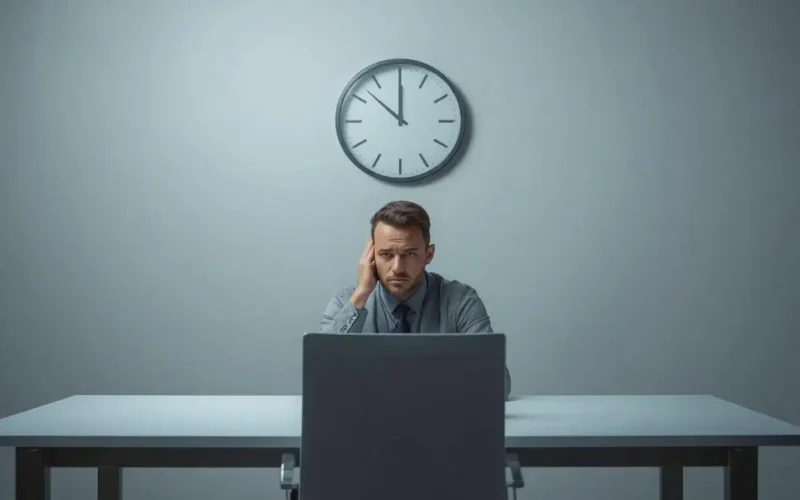
Why do customers book appointments and then never show up?
If you’ve ever looked at your calendar and thought, “Great, I’m booked solid this week,” only to sit there waiting for people who never arrive… you’re not alone.
No-shows are one of the most frustrating (and expensive) problems in small business. Whether you run a law firm, home service company, clinic, or consulting business, every missed appointment is lost revenue, wasted time, and a hit to your momentum.
So why does this keep happening, and more importantly, how do you fix it?
Let’s break it down.
Why do people book appointments they never intend to keep?
Most people don’t consciously plan to waste your time.
They just don’t feel committed.
When booking is easy but commitment is low, no-shows increase. According to research published in the Journal of General Internal Medicine, no-show rates can range from 15% to over 30% depending on the industry and system used (source).
Here’s what’s usually happening:
- Low perceived value
If the appointment feels casual or “free,” it gets treated that way. - No friction in booking
One-click booking sounds great, but it can lead to low intent. - They’re still shopping
Many leads book multiple businesses and choose later. - Fear or hesitation
Especially in legal or high-cost services, fear is a major driver of ghosting. - They simply forget
Life gets busy. If you’re not reminding them, they’re not remembering you.
Are reminders really that important?
Yes. This is one of the biggest levers you have.
A study published in Health Affairs found that appointment reminders can reduce no-show rates by up to 38% (source).
But here’s the key most businesses miss:
It’s not just about sending a reminder. It’s about sending the right reminders at the right times.
Effective reminder systems typically include:
- Immediate confirmation after booking
- Reminder 24 hours before
- Reminder 1–2 hours before
- Optional same-day check-in message
This is where automation becomes critical.
Using a platform like Surge by Thrive’s Appointment Scheduling and Workflow Automations, you can set this up once and have it run automatically without lifting a finger.
Why do customers forget even after booking?
Because booking is often a low-attention action.
Think about how people book:
- On their phone
- While multitasking
- Late at night
- Between other tasks
That means your appointment is not top-of-mind unless you keep bringing it back.
According to a report by the American Medical Association, simple SMS reminders significantly improve attendance because text messages have open rates as high as 98% (source).
So if you’re only relying on email confirmations, you’re missing the channel that actually gets seen.
This is where Email & SMS Marketing inside Surge becomes powerful. You can combine both channels so your reminders actually reach people.
Is your booking process too easy or too vague?
This one surprises a lot of business owners.
If your booking process is too quick and doesn’t ask anything meaningful, you’re attracting low-intent appointments.
High-quality bookings usually include:
- A few qualifying questions
- Clear expectations about the appointment
- A sense of value or outcome
For example, instead of:
“Book a free consultation”
Try:
“Schedule your 15-minute consultation to review your case options and next steps”
See the difference?
When you use Custom Forms and CRM / Lead Capture, you can collect intent signals before the appointment even happens.
This helps filter out people who were never serious to begin with.
Are you responding fast enough after someone books?
Speed matters more than most people realize.
According to Harvard Business Review, businesses that respond to leads within an hour are 7x more likely to qualify that lead compared to those that wait longer (source).
Now think about this:
If someone books and hears nothing from you for hours or days, they may:
- Lose interest
- Forget
- Book someone else
- Start second-guessing their decision
This is where automation changes everything.
With AI Bots and workflows, you can:
- Instantly confirm the booking
- Answer common questions
- Reinforce the value of the appointment
- Reduce uncertainty right away
Could fear or uncertainty be causing no-shows?
This is especially true in industries like law, healthcare, or high-ticket services.
People book when they feel urgency.
They cancel or ghost when fear kicks in.
Common fears include:
- Cost concerns
- Not knowing what will happen
- Feeling unprepared
- Worry about being sold to
If you’re not addressing these concerns between booking and appointment, no-shows will stay high.
A simple fix is to send pre-appointment content that builds trust.
Examples:
- What to expect during the call
- Who they’ll be speaking with
- How long it takes
- What they should prepare
You can automate this with Workflow Automations so every lead gets the same consistent experience.
What role does your website play in no-shows?
More than you think.
If your website doesn’t clearly communicate value, expectations, and next steps, people book with uncertainty.
And uncertainty leads to drop-off.
Strong SEO Websites don’t just drive traffic. They pre-sell the appointment.
They answer questions before the booking ever happens.
They build confidence so when someone books, they’re already committed.
Can reviews and reputation impact show rates?
Absolutely.
If someone books and then sees mixed or weak reviews, they may quietly back out.
According to BrightLocal, 98% of consumers read online reviews for local businesses (source).
That means your reputation continues to influence the decision after the booking.
With Reputation Management, you can consistently build stronger reviews, which reinforces trust and reduces second-guessing.
How do you actually reduce no-shows consistently?
It’s not one fix. It’s a system.
Here’s what works when combined:
- Set expectations clearly at booking
- Use multi-step reminders (SMS + email)
- Respond instantly after booking
- Reinforce value before the appointment
- Reduce fear with helpful content
- Capture better leads upfront
- Build trust through reviews and content
When all of these pieces work together, no-shows drop significantly.
The problem is most businesses try to patch this manually.
That’s where things break.
What’s the simplest way to fix this without adding more work?
You don’t need more tools.
You need one system that connects everything.
That’s exactly what Surge by Thrive is built for.
Instead of juggling separate tools for:
- Booking
- Reminders
- CRM
- SMS
- Automation
You can run everything in one place.
That means:
- Every booking triggers instant follow-up
- Every lead gets nurtured automatically
- Every appointment is reinforced with reminders and value
If you want to see how this works in your business, you can request a demo here:
https://surgebythrive.com/live-demo-request/
Or if you just want to talk through your current setup:
https://surgebythrive.com/contact-us/
FAQ
How many reminders should I send before an appointment?
Most businesses see the best results with 2 to 3 reminders. One right after booking, one the day before, and one the day of.
Should I use SMS or email for reminders?
Both. SMS gets seen quickly, while email provides more detail. Combining them increases effectiveness.
Do deposits help reduce no-shows?
Yes, in many cases. Even a small deposit increases commitment, but it depends on your industry and sales process.
What is a good no-show rate?
It varies by industry, but anything above 20% usually indicates a system problem that can be fixed.